Tailored Decay
Category: Apparel
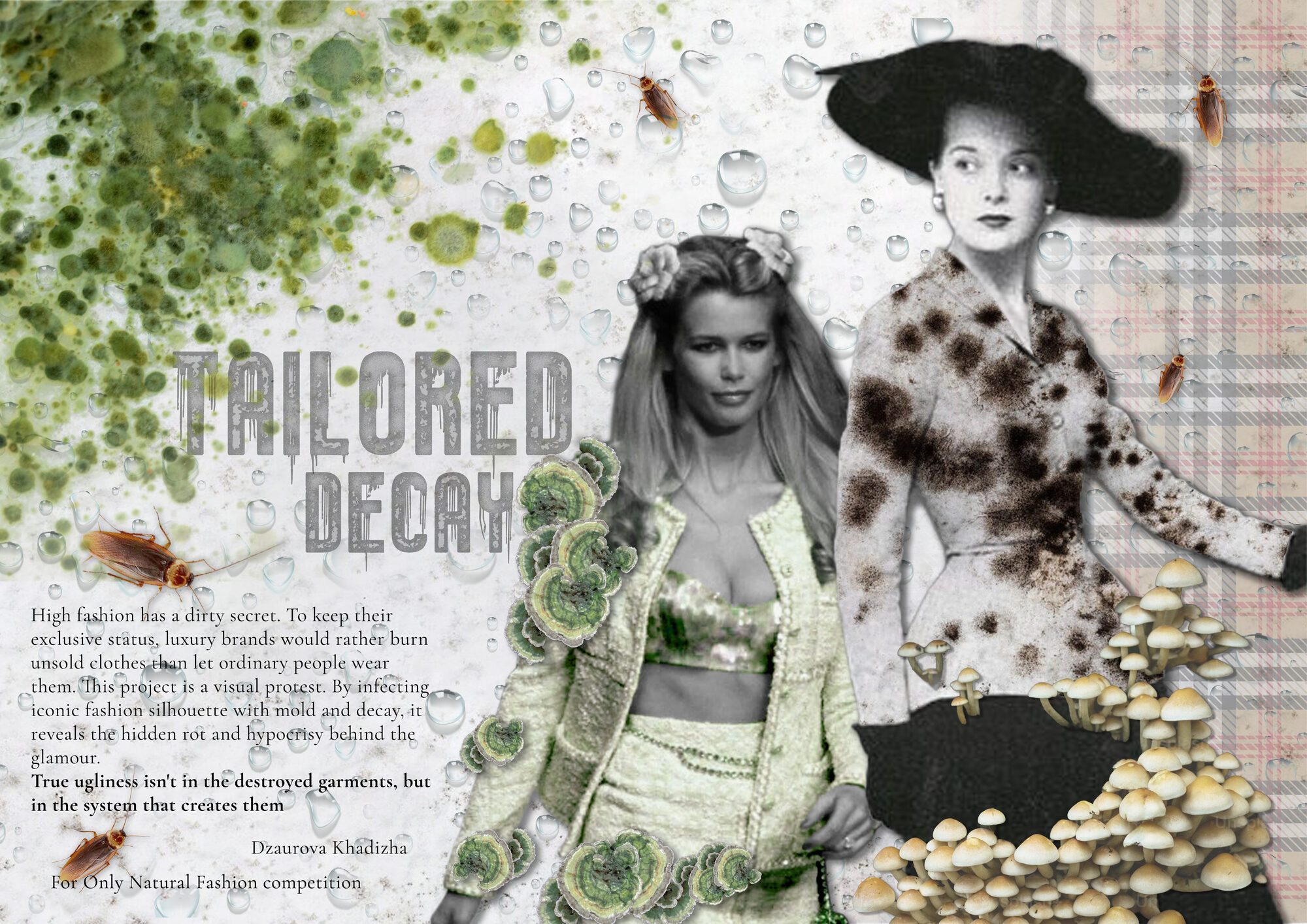
I want people to feel a visceral disgust—to feel sick to their stomachs—and never be able to look at fashion the same way again. The project weaponises the feelings of shame and disgust against institutional hypocrisy - Luxury fashion brands masquerade under the guise of philanthropy, but behind closed doors they actively fuel the environmental crisis all in the name of retaining their luxury image and status by preventing their garments from being worn by lower class citizens. And how can it be possible to combine all these things? I need to demonstrate it in a way that would evoke the emotions I want. After thorough research of the topic, I discovered bracket fungi. A tree infected by fungi may look sculptural, interesting and beautiful, yet covered behind it is a fatal sickness and death. Similar to that, the human body wrapped in synthetic polyester mirrors a dying tree, adorned by polypores. It is easy these days to look at plastic clothing with admiration when it looks beautiful and cheap at the same time, ignoring the silent toxicity it hides that accumulates in our bodies and our ecosystem. And so, to demonstrate the decomposition of the system, I decided to use polypores in fashion archetypes. The iconic Chanel tweed suit is chosen as a primary canvas specifically because it represents the peak of gatekept luxury. In this design the suit’s decay isn’t a sign of its old age and neglect - rather it rots because the system that birthed it is slowly dying on the inside. The “polypores” emerging from the clothing are made entirely from unbleached wool and pure silk, demonstrating that true longevity lies in co-existence with nature, not in everlasting sham of fast and luxury fashion. By subverting this silhouette through the use of natural, biodegradable materials, Tailored Decay aims to confront the inner rot plaguing the industry while celebrating nature’s power and harmony that allows it to gradually restore and decompose all that human vanity destroys.
Download PDF 1 Copy URL
 Login to Like 0