MOWN - A Terrazzo Study in Strict Geometry and Wild Biomass
Category: Furniture
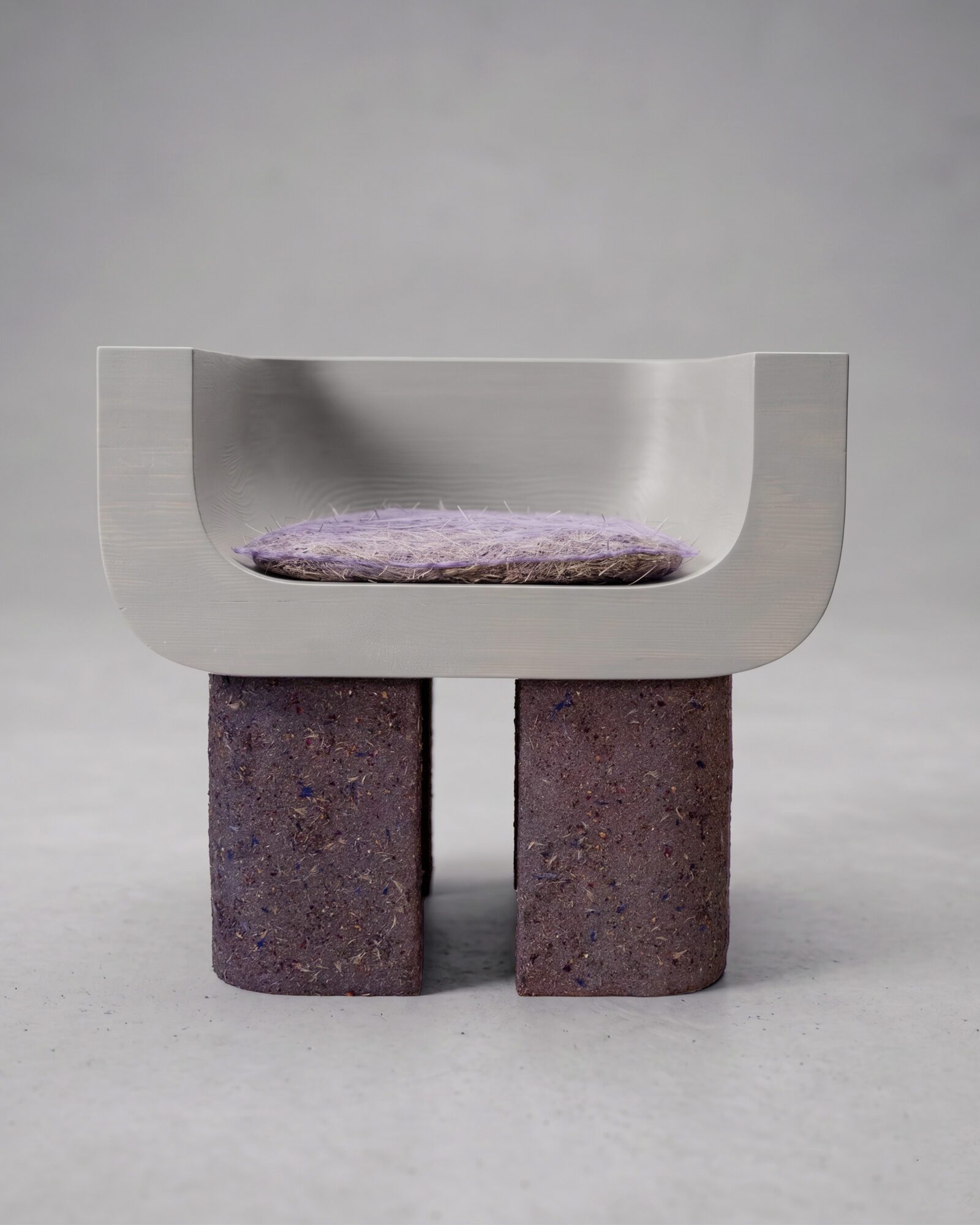
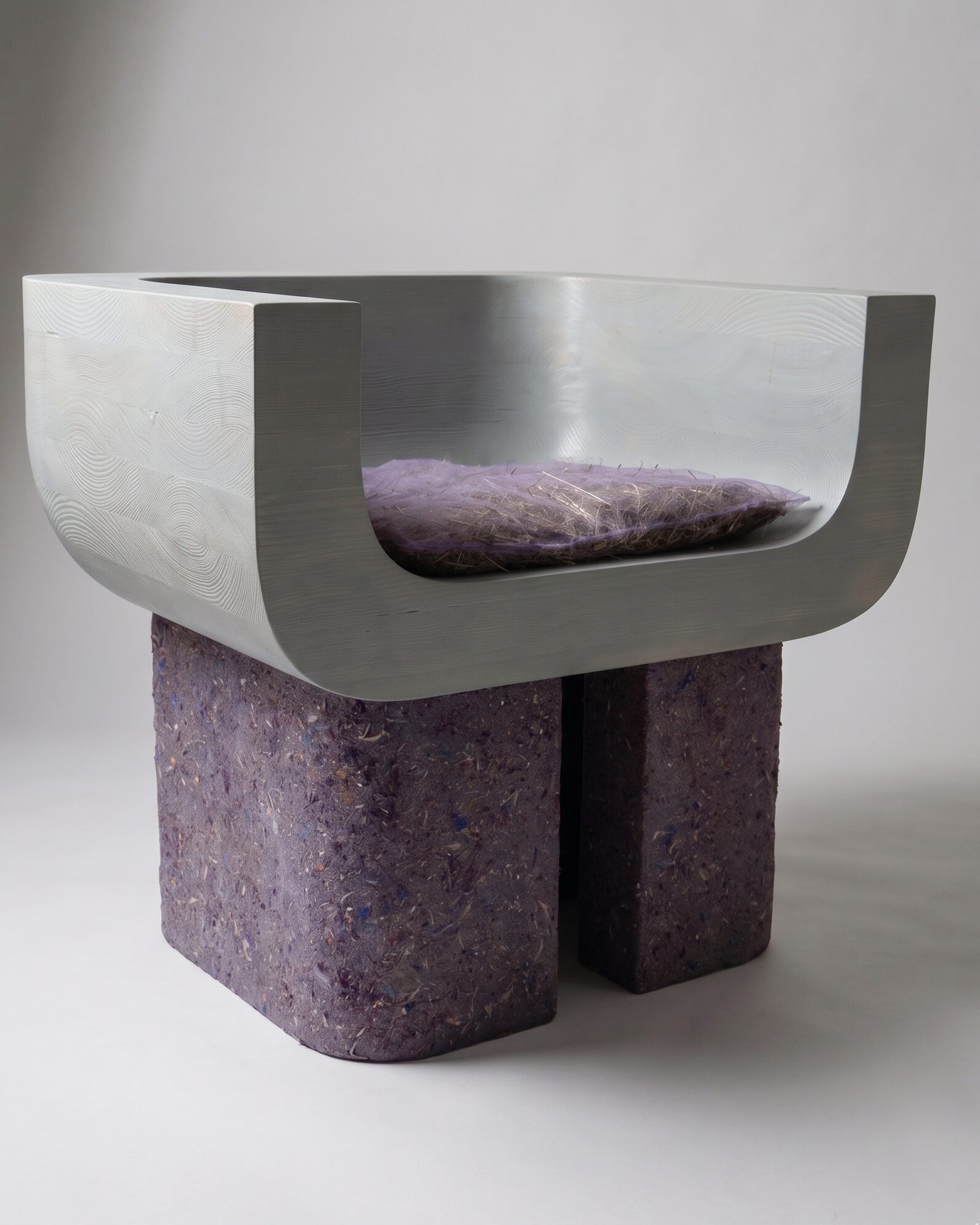
What Difference Can a Chair Make? How can a piece of furniture promote biodiversity for endangered insects? By utilizing wild plants from roadsides and industrial CNC waste, this lounge chair demonstrates that industrial design can actively drive a sustainable transformation. Sustainable design is often associated with soft, organic shapes meant to signal "eco-friendliness." This chair does the exact opposite: it places wild nature into a strict, geometric form to prove that biomaterials belong in modern, rigorous furniture architecture. The Ecological Problem and Innovation The base of the chair is constructed from a self-developed biomaterial made from wild roadside flowers and hay. Today, roadsides and field edges are the last sanctuary for insects as commercial agriculture eradicates their natural habitats. However, these areas require regular mowing. The problem is that the plant waste is often left behind, leading to eutrophication (over-nutrification) which destroys the insects' final living spaces. By harvesting the waste from this necessary maintenance, the chair becomes a tangible collaboration between humans and insects, on the insects' terms, and with empathy for all living things. The plant biomass is cast together with wood waste collected from CNC routers, natural pigments, and a binder made from milk protein (casein). Casein is a time-tested, natural adhesive that has been used traditionally to glue wood for thousands of years, long before the invention of synthetic resins. This results in a unique "flora terrazzo" where flower petals and stems remain visible as beautiful fragments, eliminating the need for modern synthetic plastics or laminates. Form, Geometry, and Contrast The design language is built on pure contrast within a strict geometric system. A sculptural, light gray seat is precisely joined with two solid, rectangular blocks of the self-developed biomaterial. The sculptural seat meets the two blocks of the base with a perfect fit, engineered without any gaps. The light gray color of the seat was deliberately chosen to create an illusion that it hovers above the massive blocks. The proportions of the chair are deeply linked through a mathematical system: the distance between the legs equals the height of the seat, and the radii are reused inversely. This creates visual balance and an unexpected lightness within the heavy, solid volume. To complete the organic contrast, a tailored, transparent tulle cushion filled with pure hay rests on the seat. The tulle was chosen deliberately for its transparency, acting as a visual window that reveals the raw biomass inside, making the ecological cycle fully visible instead of hiding it behind traditional upholstery.
 Copy URL
 Login to Like 0