Field to Form
Category: Furniture
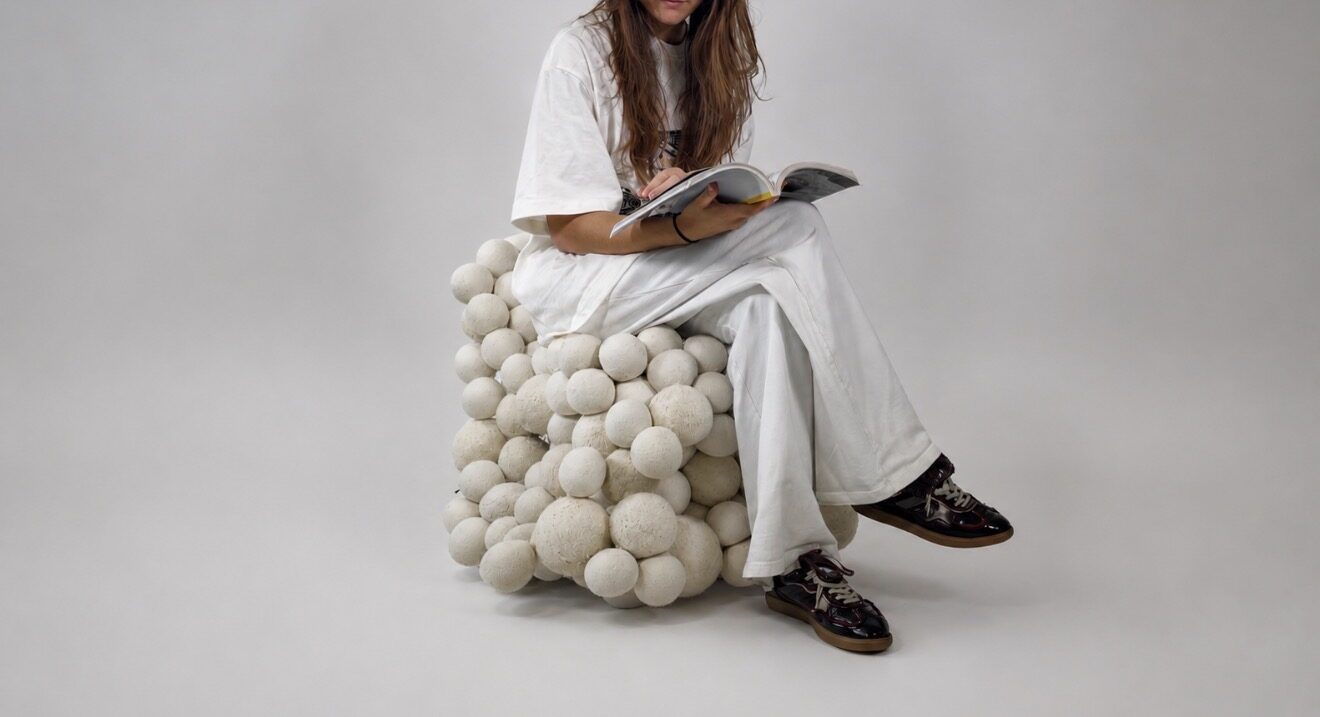
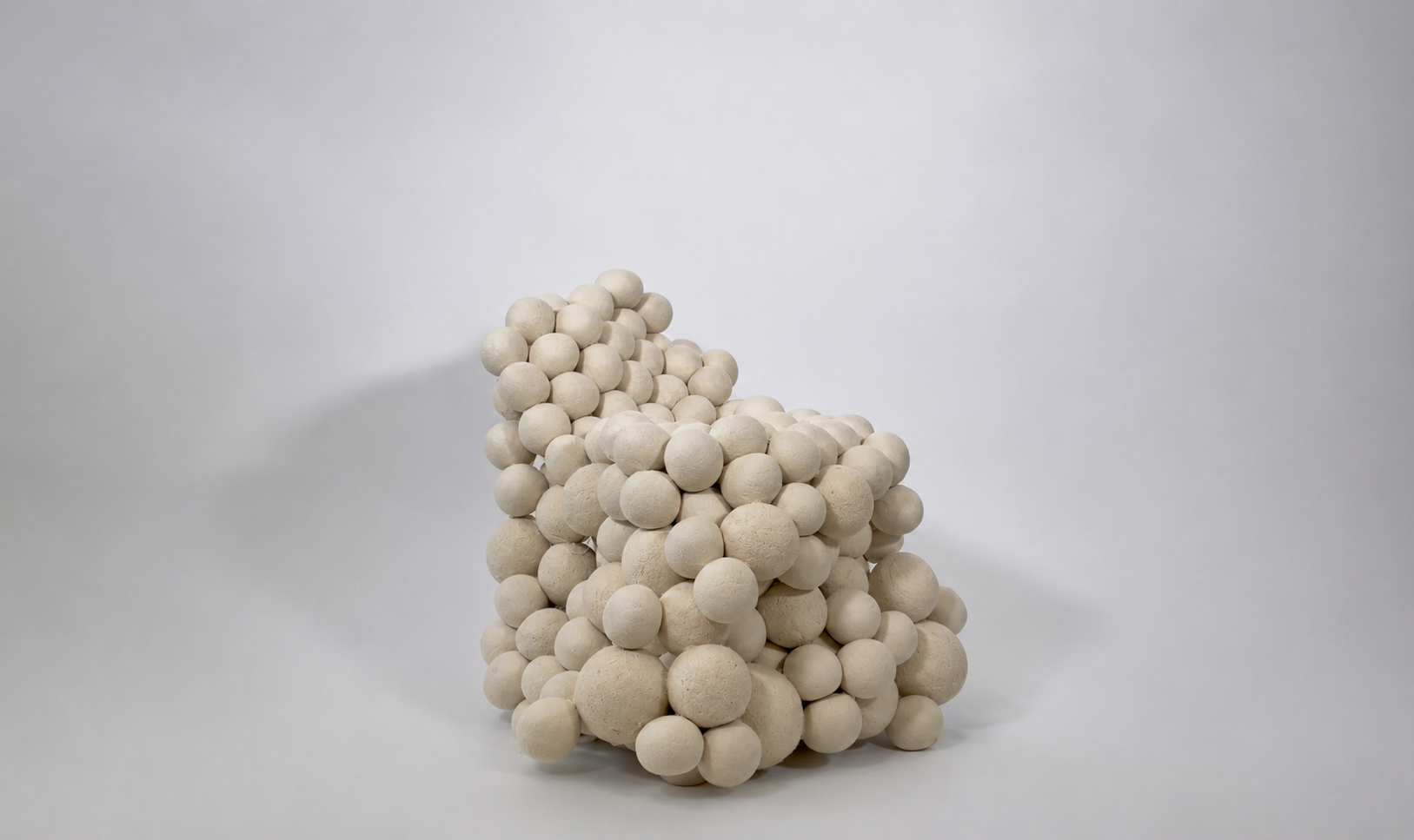
Field to Form responds to the issue of British wool holding very little value and the challenges this creates for farmers. It celebrates the beauty, versatility and sustainability of 100% British wool. Made entirely from Romney wool and using no materials other than linen thread, the chair explores how a material often used for textiles can be transformed into a contemporary piece of furniture. By creating a high value application for an undervalued natural resource, the project aims to demonstrate the potential of British wool beyond its traditional uses and encourage greater appreciation for the material and the people who produce it. The chair is constructed from individually handmade wool balls. Each ball was made by wrapping raw Romney wool into a sphere and using a water felting process in a washing machine to create a dense, durable form. This allows the wool fibres to naturally bind together without the use of synthetic materials, foam, glues or chemical adhesives. Once felted, every ball is hand-sewn to the surrounding balls at each point of contact, creating a strong structure that can comfortably support weight. British wool holds very little value, often selling for as little as 68p per kilogram, despite being a renewable and biodegradable material. However, its strength, resilience and durability make it particularly suited to interior applications. Through this project I worked directly with farmers, gaining a deeper understanding of the challenges facing the British wool industry and the untapped potential of this natural resource. As part of the project, an agreement was developed in which farmers would receive 30% of any profits generated, helping to create greater value for the people producing the material. The title, Field to Form, reflects the full lifecycle of the chair. Throughout the design process I was conscious of only using natural materials. Once the chair reaches the end of its life, the threads can be cut, the balls separated and the wool shredded and used as fertiliser to grow the grass that feeds the sheep. This circular lifecycle is illustrated in the attached image. The arrangement of the balls was inspired by the patterns of sheep flocking. This can be seen in the chair's organic form and clustered structure, creating a visual connection between the finished piece and the landscape from which the material originated.
 Copy URL
 Login to Like 1