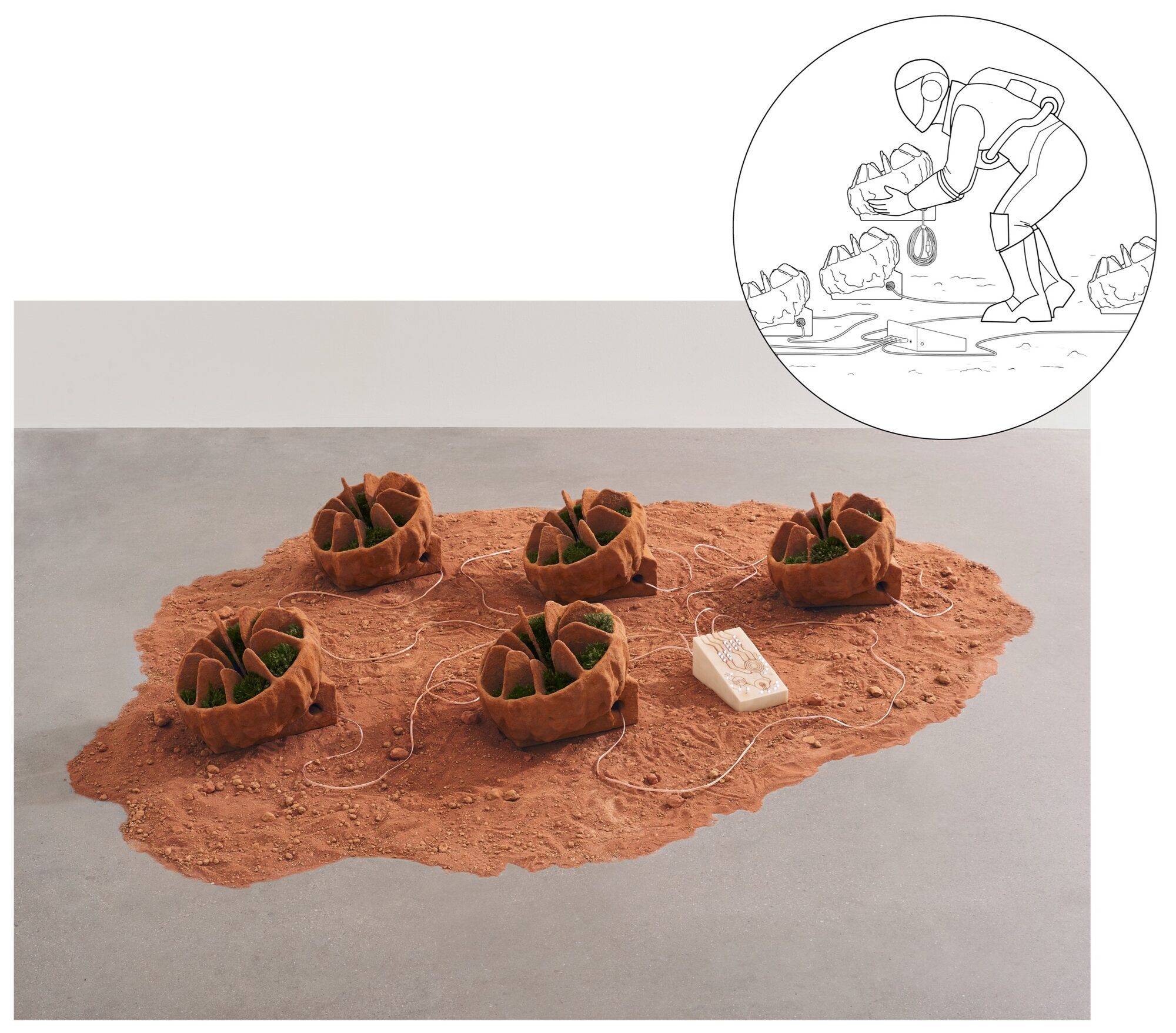
Moss on Mars: The Parabolic Photon Vessel
Category: Interior
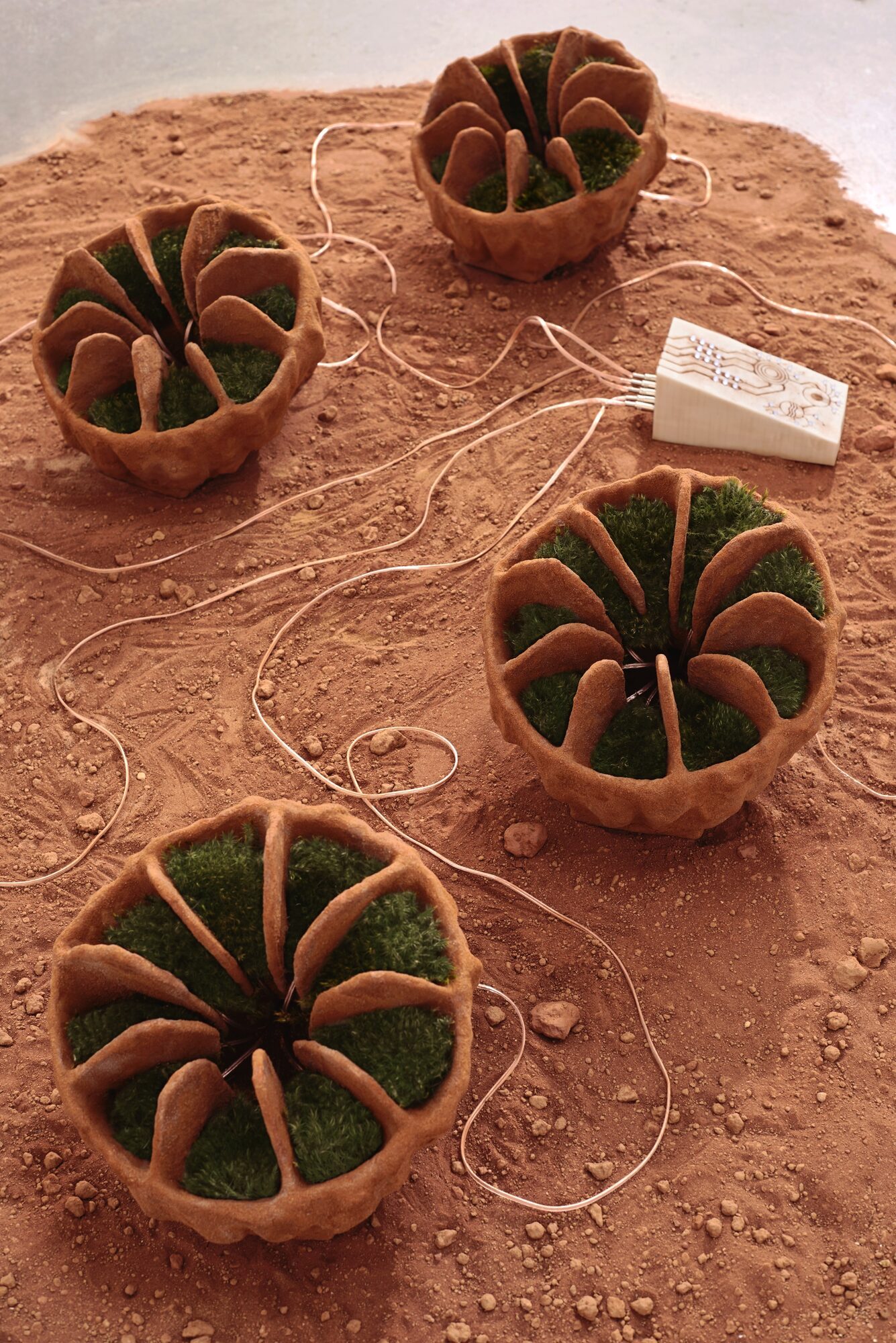
This speculative design project explores how the interiors of future Martian biospheres might be created using local and natural materials, reducing the need for interplanetary transport. It also reflects on how principles of material efficiency and biologically grounded making could inform more resource-conscious interior design on Earth today. The project uses Martian regolith, the most abundant material on Mars, as the primary construction resource for vessels that function as microhabitats for the desert moss Syntrichia caninervis, whose ecosystem services include early soil formation and the production of bioelectricity through photosynthesis. The vessels begin as hand-sculpted forms in clay before being digitally scanned and translated into simulated Martian regolith through 3D printing. Moving from clay to code, the process creates a link between ancient craft traditions and future planetary fabrication, suggesting that the knowledge embedded in our oldest materials may continue to shape how we build beyond Earth. Lignin, a natural polymer found in plants, is explored as a potential binder for the regolith. Designed to slowly break down over time, the vessels participate in the ecosystem they support. Nutrients contained within the lignin-bound regolith become available to the moss while, through cycles of growth and decay, the moss contributes organic matter of its own. As it spreads beyond the vessel, it forms a green carpet across the biosphere, initiating the first stages of soil formation. Integrated biological photovoltaics harvest small amounts of electricity from the moss's photosynthesis to power sensors embedded within the vessels. By monitoring light, temperature, water availability, and the wellbeing of the moss, the biosphere becomes a responsive interior landscape in dialogue with its inhabitant, proposing a biologically grounded and resource-efficient approach to future habitability. Although situated in a Martian future, the project ultimately reflects back on Earth today, suggesting that interior objects could be made from natural, local materials and designed as living systems rooted in regeneration and circular material use.
 Copy URL
 Login to Like 3