Tête à tête
Category: Furniture
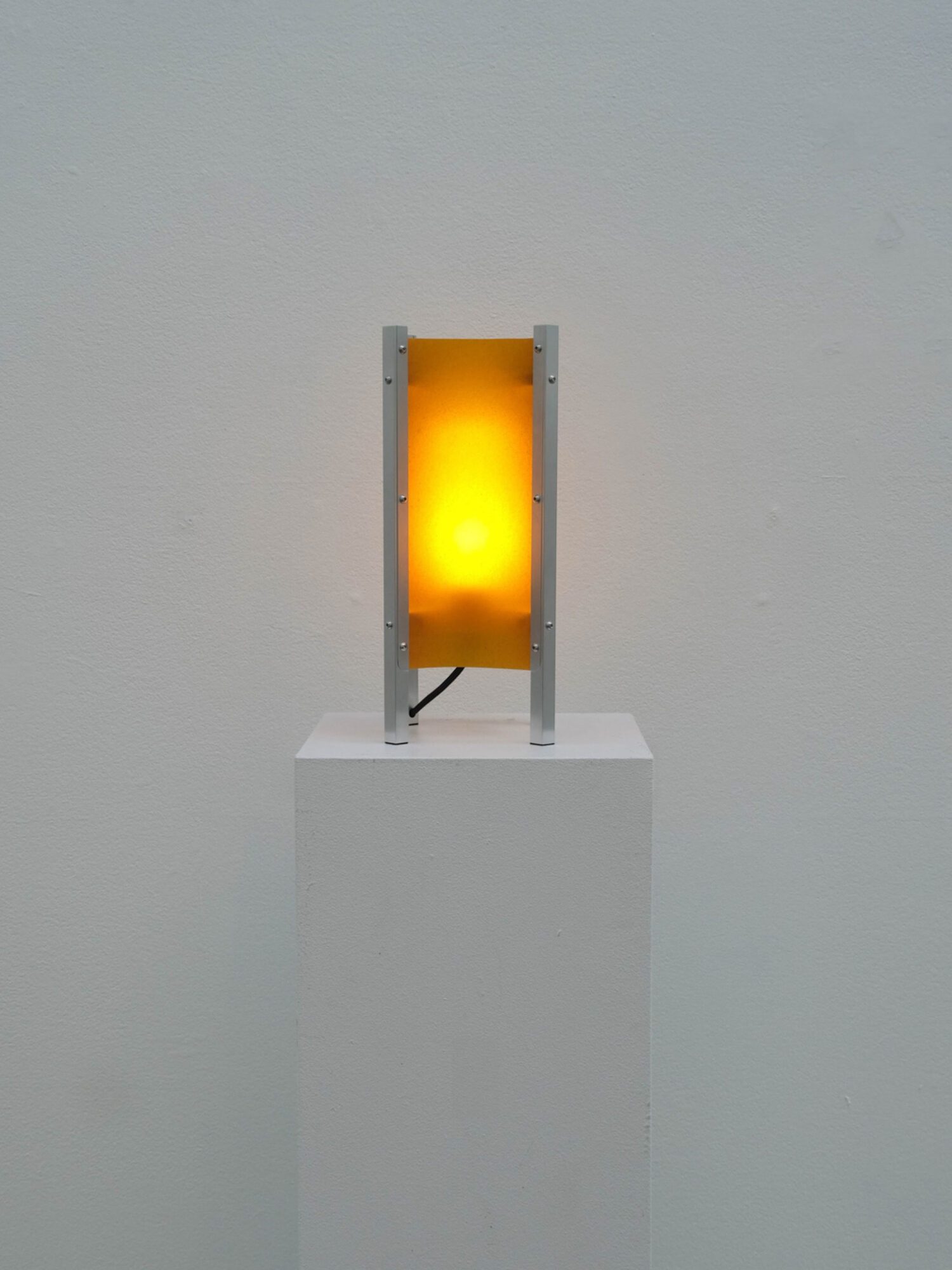
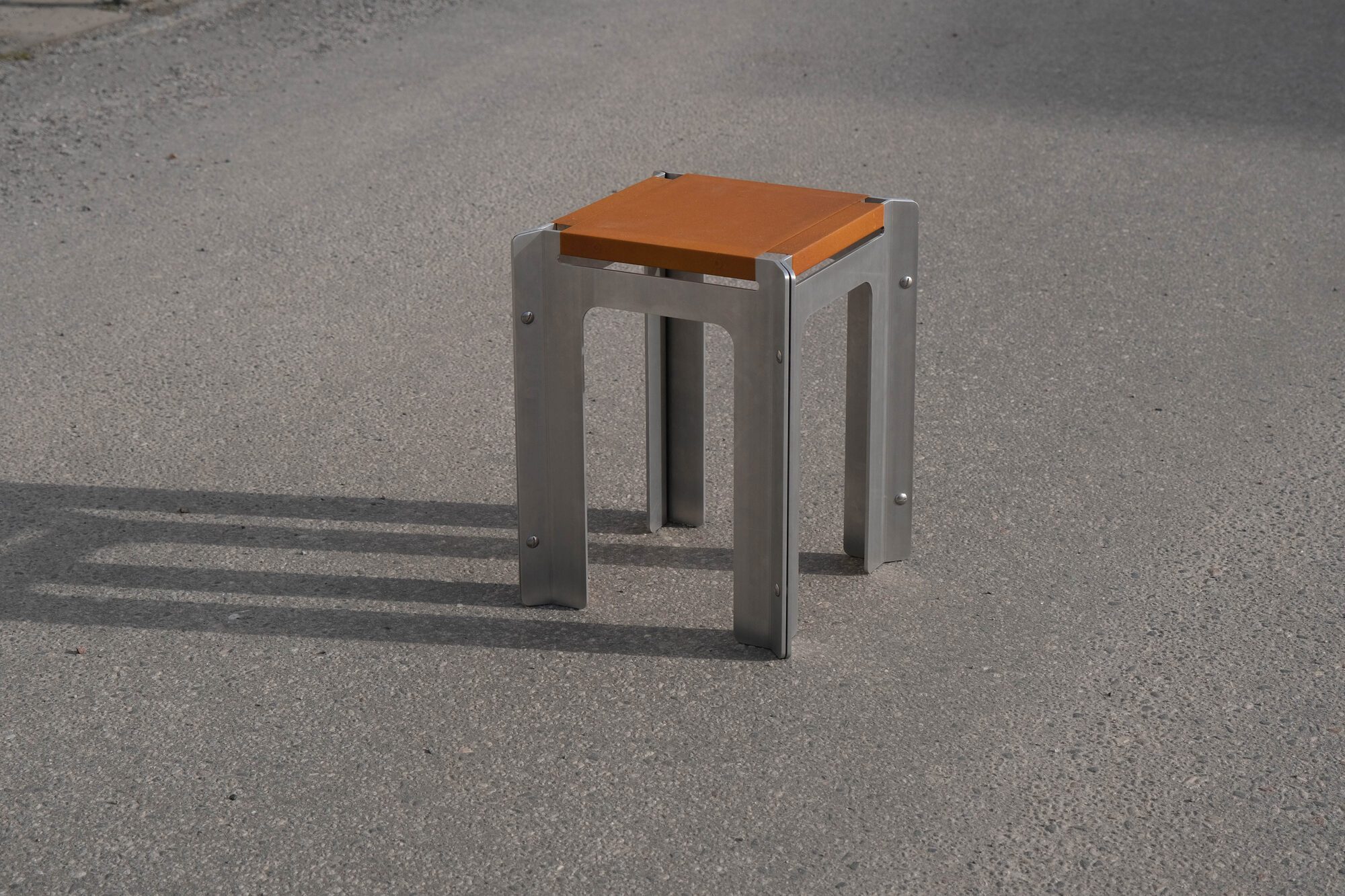
On a global level, 78 million tons of citrus are produced each year, half of which is processed by the juice industry and discarded as waste. While scientists increasingly develop new materials from these agro-industrial by-products, a critical gap remains in the lack of application in objects. As designers, it is our responsibility to bridge this gap by developing the techniques and tangible products that will normalize sustainable alternatives and accelerate the acceptance of biomaterials over fossil-based resources. This urgent need to prove that ecological materials can go beyond pure aesthetics is why we created Tête-à-tête. To achieve this, we developed our own bio-leather entirely from scratch, utilizing orange peels locally sourced from a neighborhood juice café. The peels were dehydrated, cleaned, and ground into a fine powder, utilizing their natural antimicrobial compounds, soluble pectin, and fibers to create a bioleather material with minimal external additives. However, we needed a mechanical system to use the material in furnitures. This sparked a collaborative dialogue where Frans brought his mastery of craftsmanship and I provided the material expertise. Together, we co-designed an assembly process that securely clamps the bio-leather between two aluminum pieces. Because this system requires no drilled holes, the material is protected from tearing or breaking, making it highly viable for structural furniture applications. We applied this system to two distinct objects to demonstrate its versatility. The first is a lamp, which highlights the material's aesthetic and translucent qualities by diffusing light into a warm orange tone. The second is a seat, which directly challenges industry standards by putting the bio-leather under significant physical pressure to prove its inherent structural strength. True to the principles of a circular design, both objects are built for effortless disassembly, enabling easy repairs or straightforward recycling. At the end of their lifespan, the electrical components can be salvaged, the aluminum can be recycled, and the bio-leather can be safely composted. Tête-à-tête is a proof of concept showing that the future of functional design can be grown locally and returned to nature entirely.
 Copy URL
 Login to Like 20