Anima in Animus
Category: Apparel
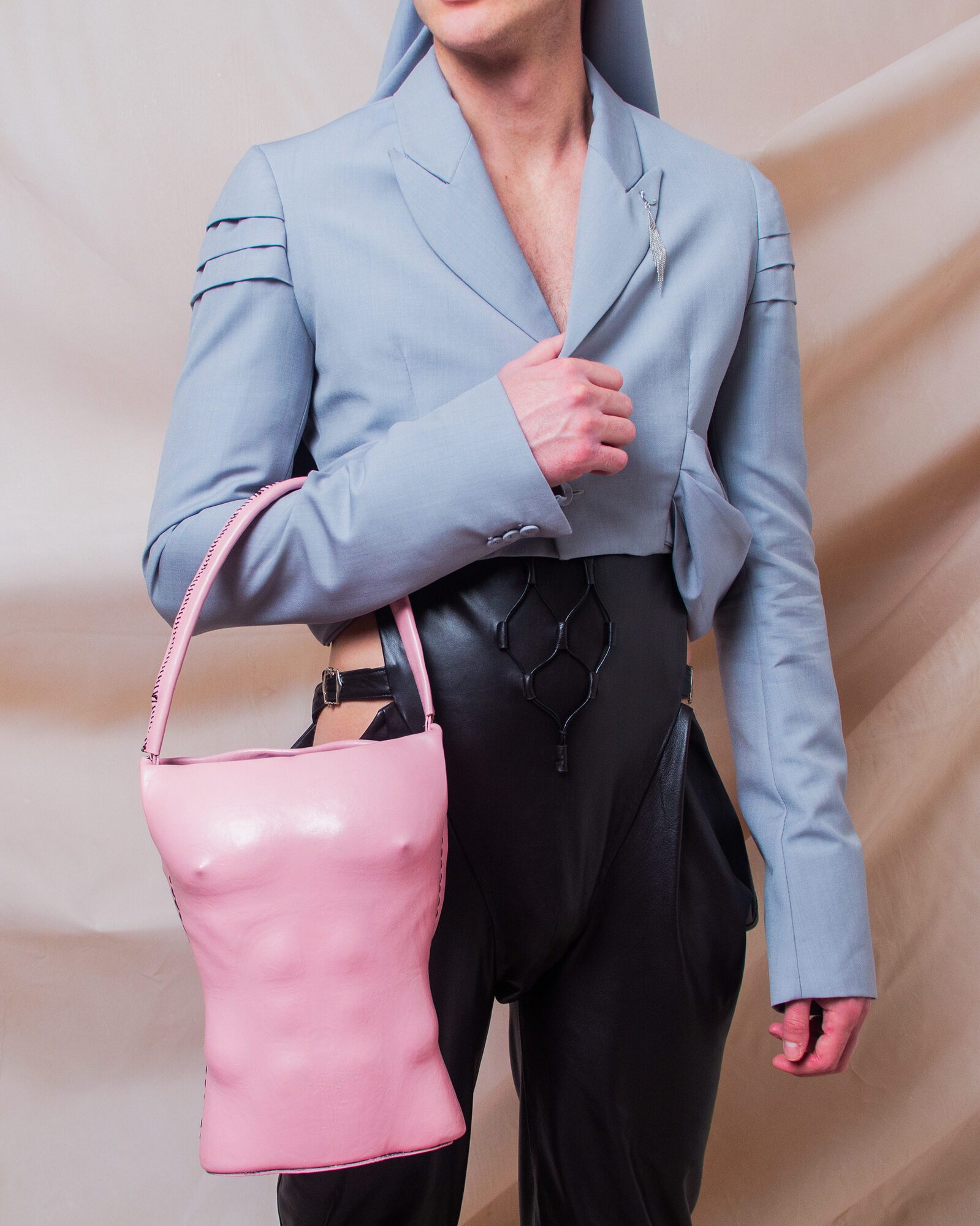
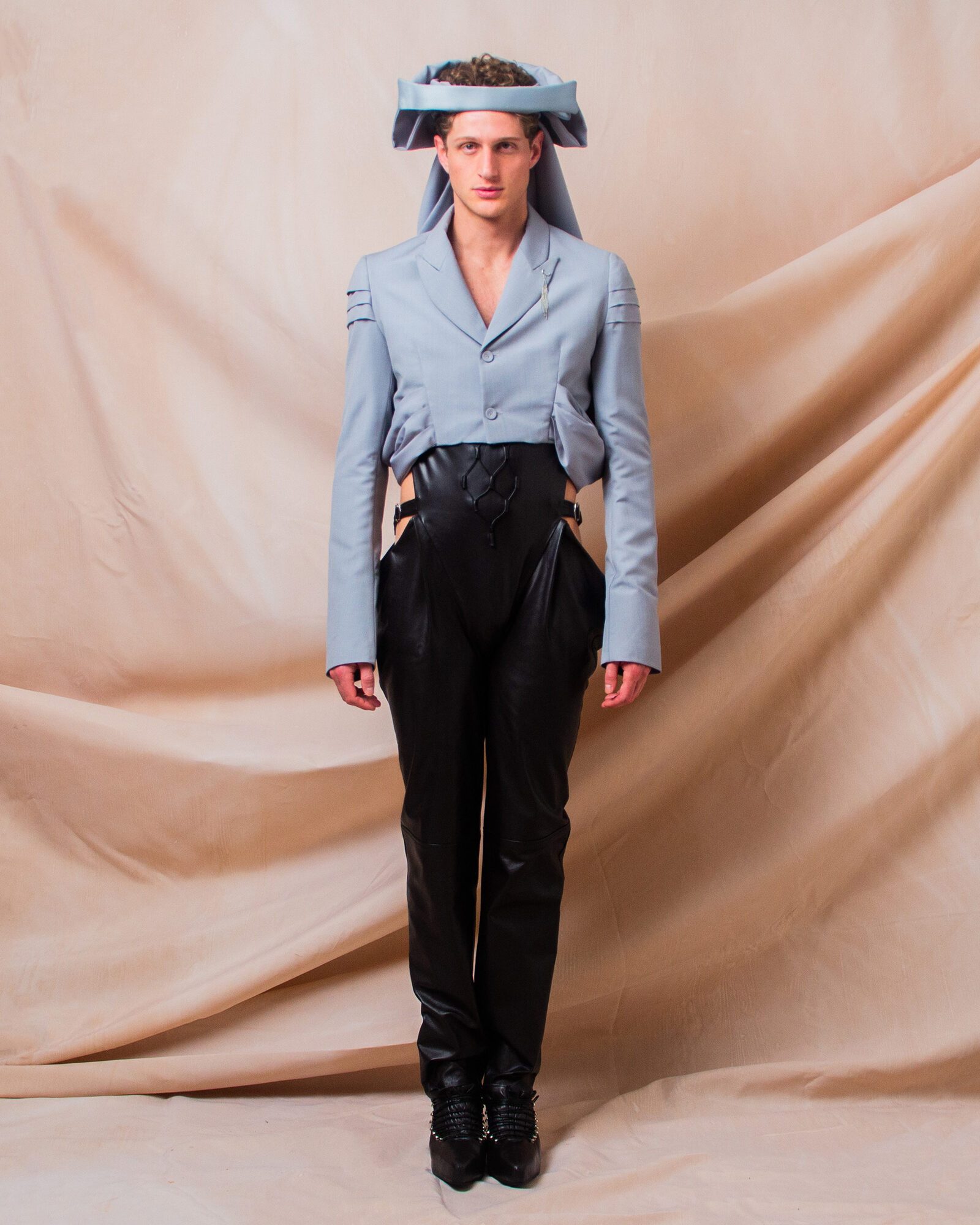
Anima in Animus – Apparel Statement Anima in Animus explores the transformation of traditional masculinity through historical dress, military symbolism, and contemporary identity. Drawing inspiration from fifteenth-century Gothic aesthetics, military uniforms, and Donatello’s androgynous David, the collection proposes a vision of masculinity that embraces vulnerability, fluidity, and emotional openness. The tailored jacket serves as the structural foundation of the look. Constructed from natural cool wool, it references the commanding silhouettes of military generals through its high break line and architectural shoulders. Delicate pleats reinterpret military shoulder insignia, while leather straps emerging directly from the jacket’s seams extend toward the head, transforming functional construction lines into symbolic elements of authority and restraint. Beneath the jacket, the lambskin leather jumpsuit reinterprets the fifteenth-century hose and the military protective pouch. Historical references are translated into a sculptural garment that frames rather than conceals the body, challenging conventional masculine archetypes through sensuality, exposure, and vulnerability. Across the torso, geometric forms inspired by fifteenth-century dagging reconstruct the idealized male body, while pointed metal piercings echo the elongated proportions of Gothic architecture. The sculptural handbag, created through digital modeling, leather wet molding, and hand finishing, references the triangular masculine physique while simultaneously recalling the inverted pink triangle, transforming a symbol of persecution into one of sensitivity and resilience. The heeled footwear combines fifteenth-century pointed shoes with feminine pumps and military lacing, dissolving the boundaries between masculine and feminine codes. Constructed entirely from natural materials—including wool, lambskin leather, vegetable-tanned leather, and silk—the collection ultimately proposes masculinity not as a fixed identity, but as a fluid condition in which authority can coexist with tenderness, fragility, and emotional depth.
 Copy URL
 Login to Like 1