Designing Between Worlds
Category: Furniture
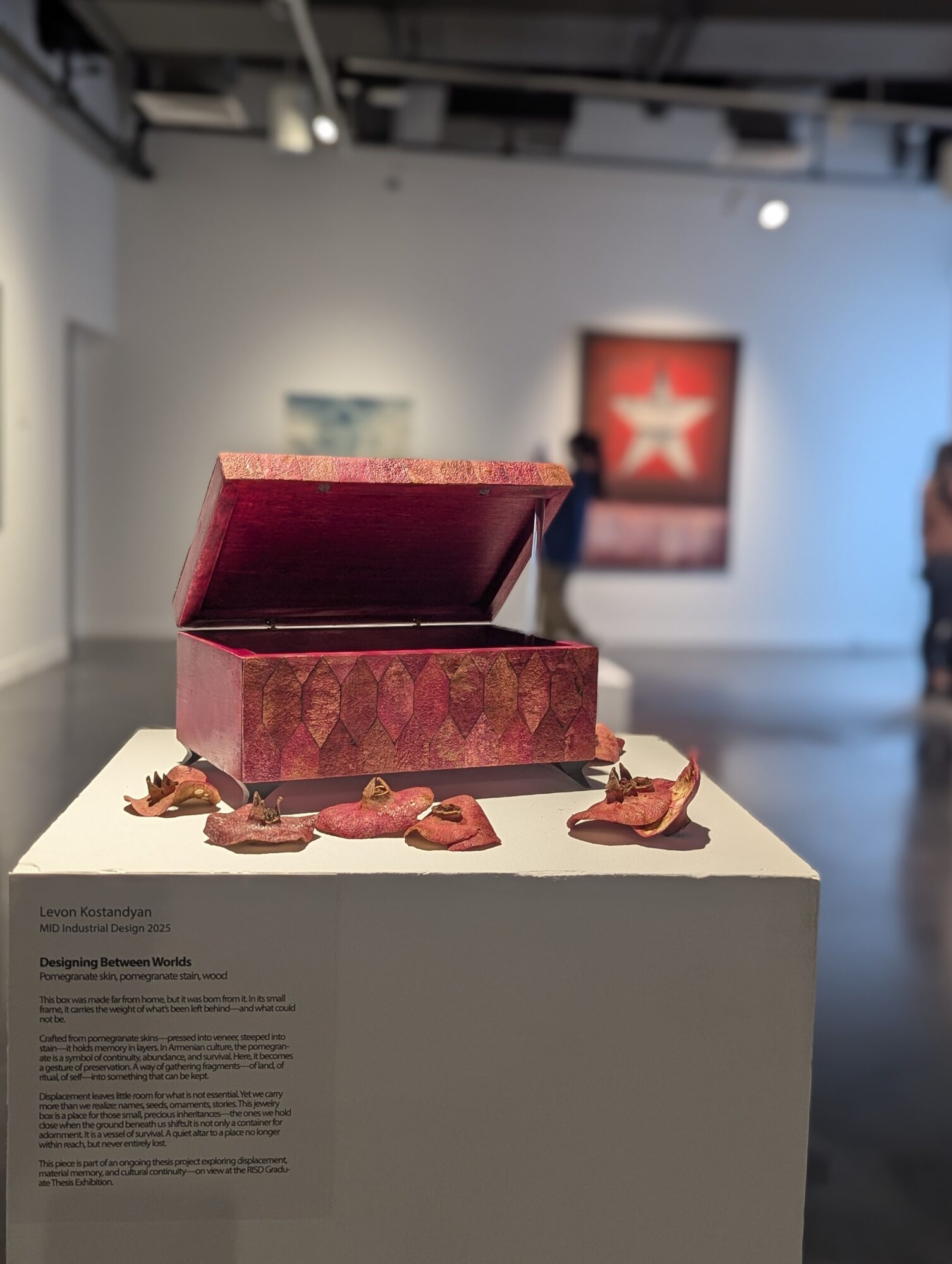
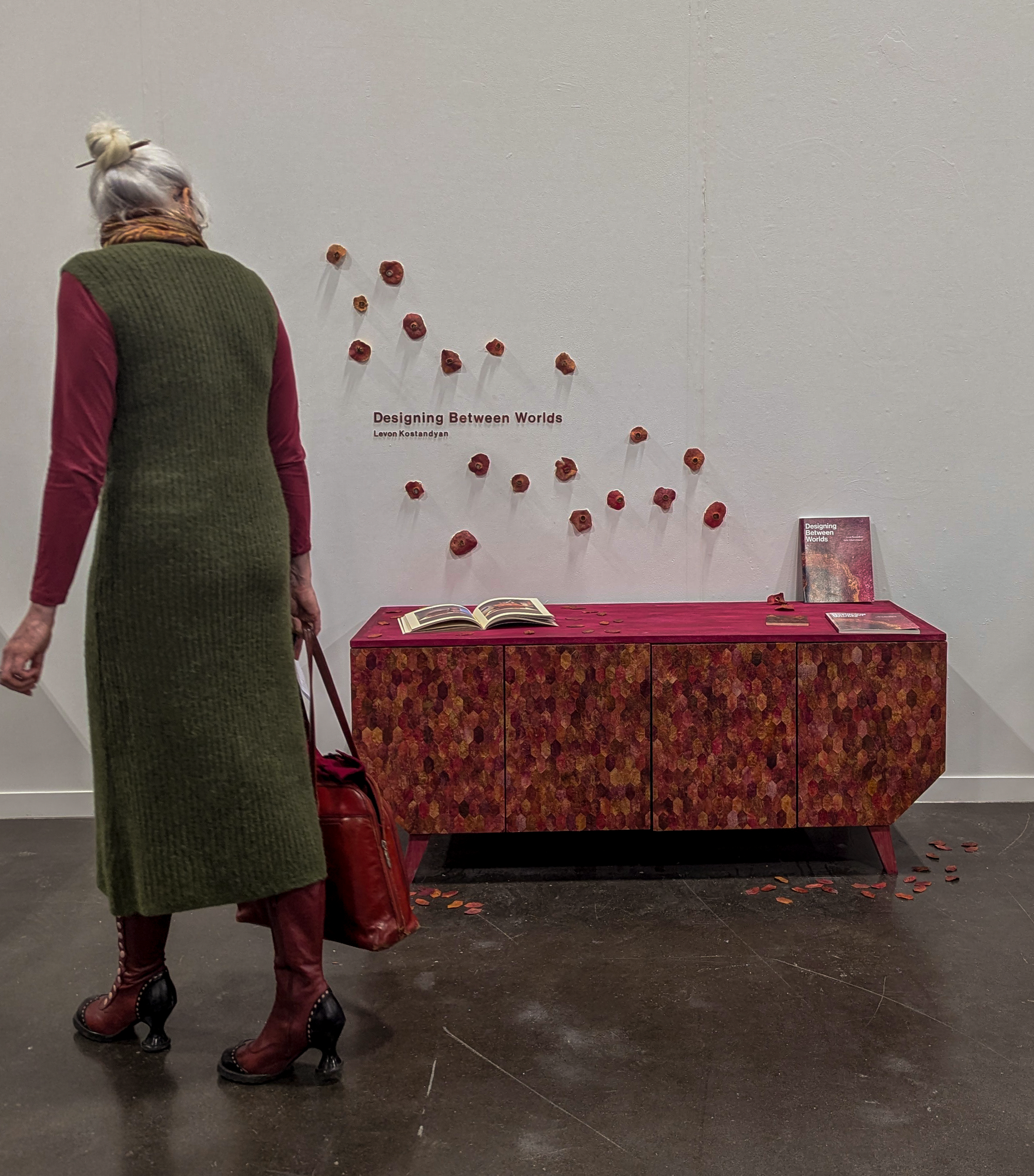
Designing Between Worlds investigates design as a practice of cultural continuity, asking how identity survives displacement and what role objects and materials play in carrying it forward. The project begins with a personal question: how does culture move with us when we leave the places that shaped it? Growing up Armenian in diaspora, that question was never abstract. It lived in rituals repeated in unfamiliar kitchens, in words fading from memory, in the quiet persistence of symbols whose origins had become difficult to trace. The pomegranate, նուռ, was one of those symbols. Present in Armenian life for thousands of years, from Urartian granaries to church stone to wedding ritual, it had always been more than a fruit. It was a way of saying we are still here. The material investigation centered on pomegranate skin, typically discarded after the seeds are removed. Through an extended process of harvesting, drying, pressing, and laminating, the skin was developed into a structural veneer capable of being worked at furniture scale. The resulting material retains the color, texture, and quiet weight of something that was once living. It does not perform heritage. It carries it. The final objects, veneers, inlays, and a credenza, propose a model for design that is culturally attuned and materially specific. They do not attempt to freeze Armenian identity in place but to let it move, adapt, and remain intact in feeling even as its form shifts. Continuity, the thesis argues, is not preservation. It is an active practice of carrying something forward through making.
 Copy URL
 Login to Like 0