THE SOVEREIGN OF TIME
Category: Apparel
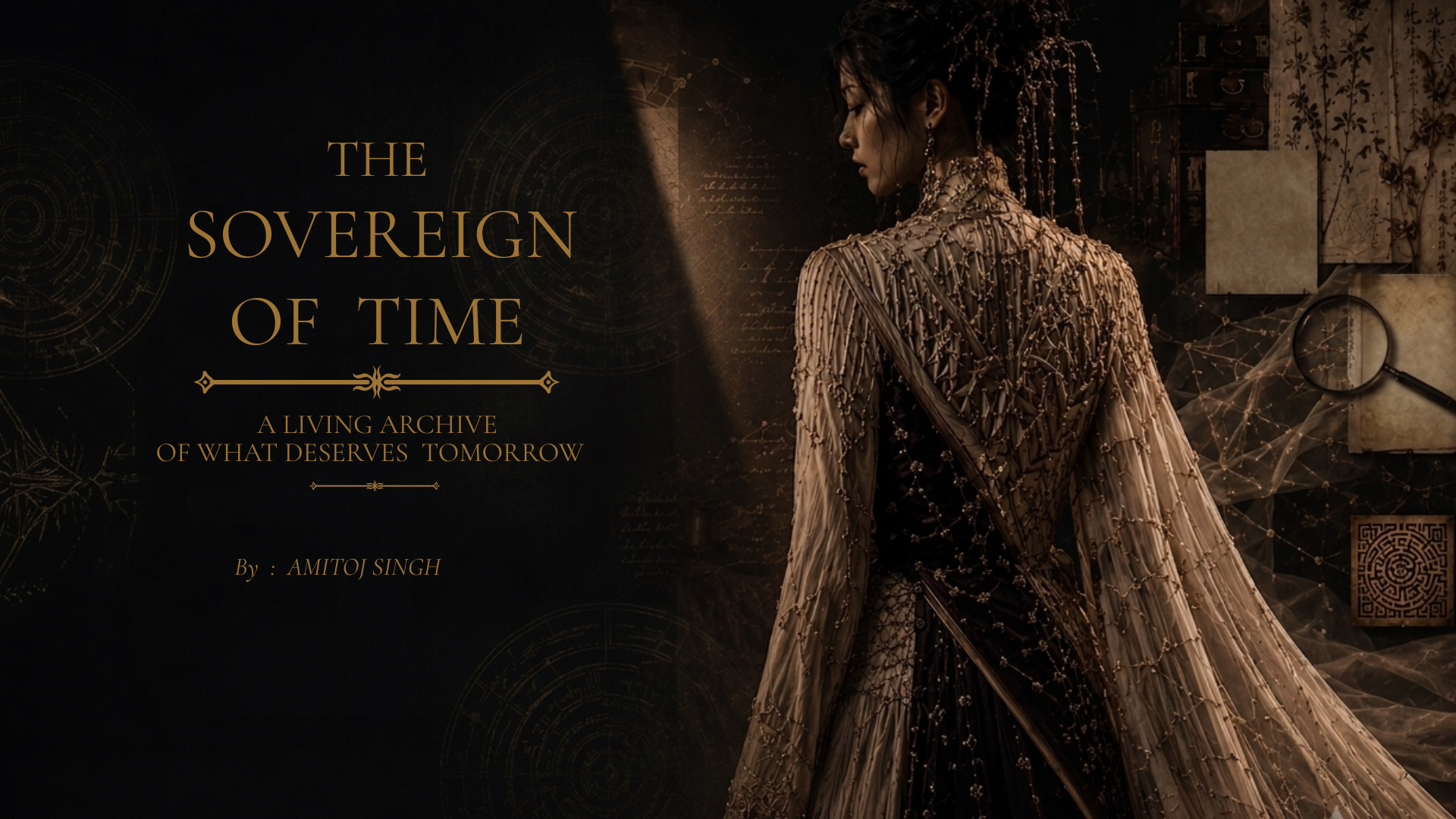
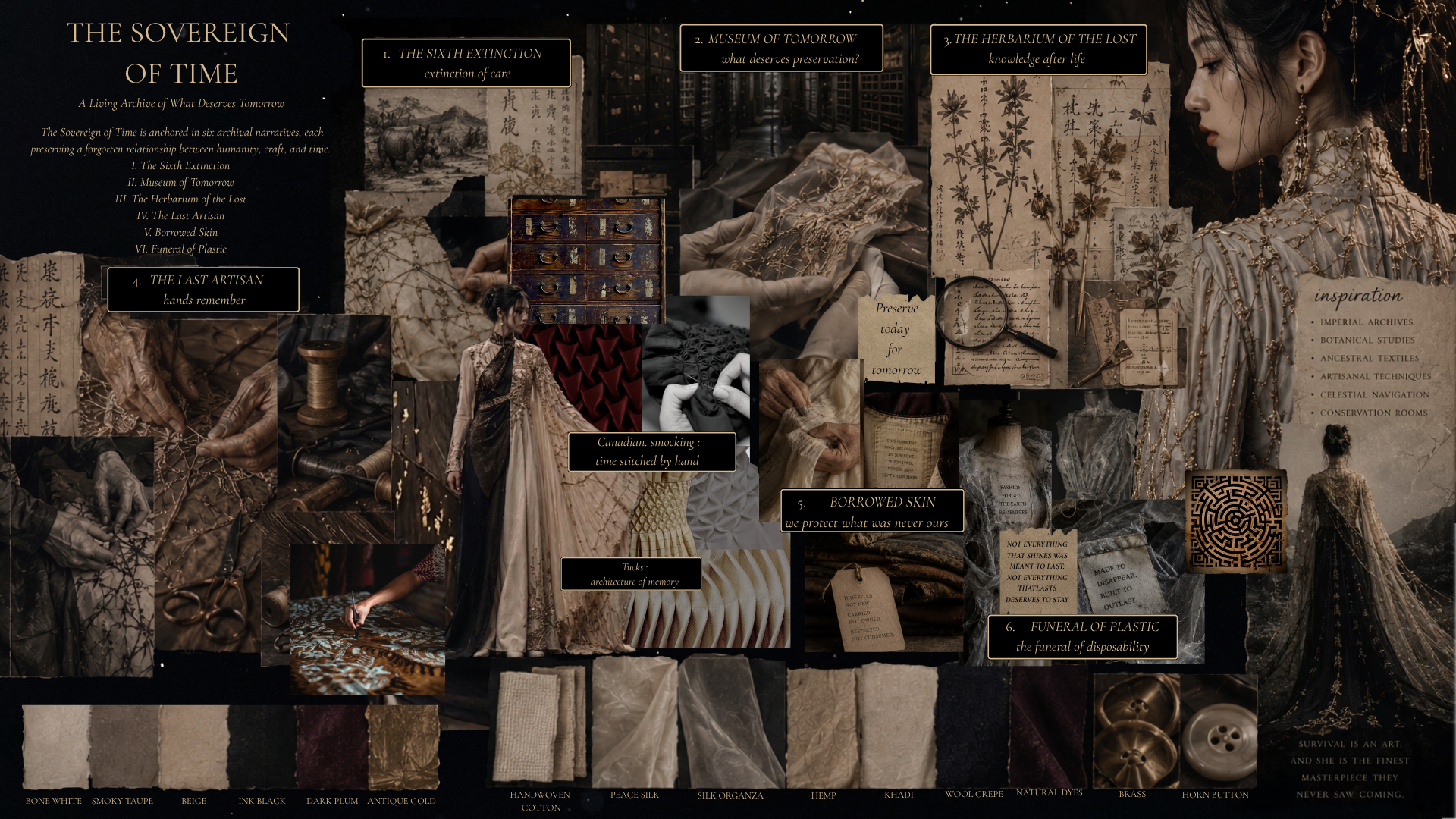
THE SOVEREIGN OF TIME A Living Archive of What Deserves Tomorrow The Sovereign of Time challenges the culture of disposability by redefining sustainability as permanence rather than replacement. Instead of treating garments as seasonal products, the collection imagines clothing as a living archive—an heirloom created to preserve craftsmanship, memory and material integrity across generations. The wearer is no longer an owner but a temporary custodian, entrusted with protecting what was inherited before passing it forward. Every design decision asks a single question: What deserves to survive? The garment is anchored in six archival narratives, each preserving a forgotten relationship between humanity, craft and time. The Sixth Extinction reflects the disappearance of care rather than species alone, while Museum of Tomorrow questions what future generations will consider worthy of preservation. The Herbarium of the Lost transforms endangered knowledge into a living botanical archive, and The Last Artisan honours techniques that still carry the intelligence of the human hand. Borrowed Skin reminds us that every natural resource is inherited rather than owned, and Funeral of Plastic mourns the culture of disposability instead of the material itself, advocating longevity over consumption. The silhouette embodies quiet authority through an architectural asymmetrical vest layered over fluid contemporary drapery. Inspired by archival cases, ceremonial garments and East Asian tailoring, it balances protection with movement, structure with softness, permanence with change. Canadian smocking, engineered tucks and restrained hand embroidery replace decorative excess, while motifs derived from root networks, mycelium, celestial navigation and labyrinths translate systems of memory into contemporary couture. Peace silk, khadi, hemp, silk organza and naturally ageing brass reinforce the philosophy that beauty should mature rather than expire. Rather than presenting sustainability as an environmental trend, The Sovereign of Time proposes it as a cultural responsibility. The garment is designed not merely to biodegrade, but to deserve preservation through craftsmanship, emotional value and timeless construction. It is an object intended to outlive its first wearer—a future heirloom that reminds us we do not inherit craft, culture or nature as possessions, but as custodians. We are not owners. We preserve. We return.
 Copy URL
 Login to Like 1