< Back to all entries & Profiles
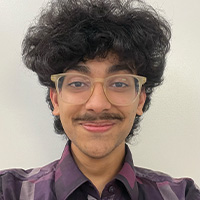
User Dipesh profile image

Dipesh Aggarwal

Parsons School of Design

My design point of view exists in resistance to imposed singularity in culture. I explore how dominant ideologies attempt to flatten plurality, drawing parallels between socio-political systems and land-based fashion practices. I begin my design process through craft, valuing its visibility as a way to prompt audiences to reflect on the labor embedded in clothing. As AI and industrial mass production continue to expand, I believe consumers will eventually experience a sense of saturation, leading to a renewed desire for garments that bear the visible marks of the human hand. I have had the opportunity to visit artisan villages in India where they weave their sarees. That experience reshaped my perspective, deepening my appreciation for the labor and intention embedded in every textile. It reinforced my belief that we must create opportunities of educational field visits for young generations to engage directly with the realities of production. By witnessing these processes firsthand, they can better understand that behind every product, regardless of mechanization, there is always human effort and craftsmanship. I want people to see craft as an important technique that makes us human, which was never influenced by AI but by human intuition. Yet, it is often undervalued in India and appropriated in the United States under the guise of innovation. I aim to challenge and dismantle this imbalance, which continues to create cultural and economic tension. As a designer, I aspire to bring more collaborative forces between designers- artisans, designers- customers, designers- scientists, and many more.

Website

Religion is NOT THE Culture

Category: Apparel

Competitions: Fashion Competition 2026

Since the 1980s, India has had a growing number of people who believe that Hinduism is the only faith that can exist in India. At the present time, this has accelerated, and this new wave of Hinduism called Hindutva calls for a multi- ethnic country to form only one homogenous culture. Spiritual devotion varies across different cultures in India. Hindutva's form of spirituality is rooted in Hindu supremacism, and anything different is seen as foreign. I am using the craft of weaving and fraying to protest against this movement. The symbolism of the fraying represents the emotions of anger and frustration at how the culture in India is slowly becoming more conservative than before. During colonial India, handwoven fabric was used to protest the British's mass-produced fabric. I focus on reducing reliance on industrial processes and embracing material honesty. My methods are intentionally slow and labor-intensive while remaining accessible to the audience, allowing them to play around with second-hand fabric strips that can be woven into a new garment in different ways. Hand-based processes allow me to remain in direct contact with the material, responding intuitively to its behavior rather than forcing it into predetermined outcomes. This way of working resists the speed and uniformity of mass production, instead valuing irregularity, imperfection, and time. My YouTube video: https://www.youtube.com/watch?v=8-6BivF_RCw

Working with our partners at Arts Thread to develop lifelong learning and career opportunities for students of fashion and design. Our partnership provides the opportunity to compete on a world stage, participate in industry led workshops, set up an outstanding portfolio and gain access to the resources that will kickstart careers in fashion and design.